The show “Is it cake?” on Netflix, astounds audiences as ordinary-looking objects turn out to be delectable cakes when sliced open. This fascinating duality showcases the importance of delving deeper to grasp the real essence of something, much like our quest to understand certain buzzwords in the tech industry.
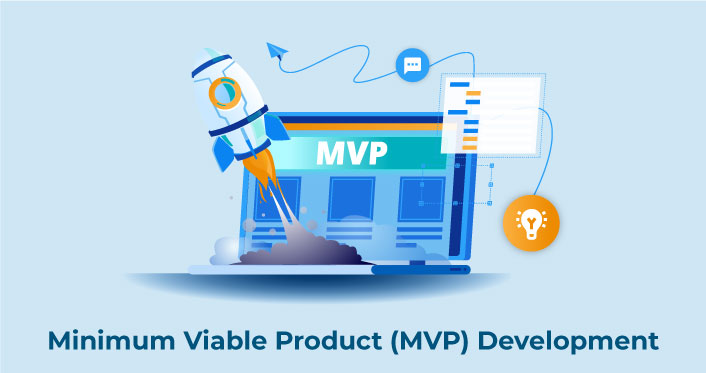
Let’s embark on a journey today, cutting through the widespread confusion surrounding the term “MVP” (Minimum Viable Product) and comprehending its genuine intention through the lens of The Lean Startup methodology.
MVP: The Over-Extended Term
MVP has become synonymous with ‘the first version of a product’, a deviation from its true essence. Remember, the word “Minimum” is in the name! If your MVP seems overloaded without a clear purpose for its launch, you’re possibly veering off its actual meaning. The correct use of terminologies, especially MVP, is vital for cohesive teamwork and addressing challenges head-on.
Eric Ries, in his book ‘The Lean Startup,’ illuminated the MVP’s concept, not as a one-size-fits-all solution but as a strategic tool for specific contexts.
The Lean Startup: Navigating the Unknown
Ries’s doctrine for entrepreneurs emphasizes navigating the treacherous waters of high uncertainty. He champions startups as not just about products but entire institutions needing a unique management approach, given the unpredictable challenges they face.
Startups must judiciously utilize their limited resources. The central dilemma is evolving a product that resonates with the market. Using the term MVP for every prototype without understanding its real essence is a mistake.
If your product development is just about ticking off a predefined list without probing its market relevance, then it’s a mere product version, not an MVP.
MVP: The Scientific Approach
What qualifies a product as MVP is its roots in a scientific approach. It’s about hypothesizing, testing those hypotheses, and learning. For instance, upon noticing difficulties faced by people eating egg tarts, you hypothesize that a modified tart would be more desirable. Crafting a differently shaped tart and gathering consumer feedback would be a genuine MVP. It could be as simple as a note, an email, or even a social media account – any medium that verifies your assumptions.
To genuinely label something an MVP, ask:
- What problem am I addressing?
- What hypothesis am I putting to test?
- What insights am I looking for?
When Your Product Isn’t an MVP
If these situations sound familiar, you’re probably not dealing with an MVP:
- Pre-defined development without exploration scope.
- Top-driven decisions with no grassroots input.
- A culture not open to failures.
- Development without testing or feedback.
- Making decisions based on assumptions instead of customer/data insights.
- Random feature additions with no clear direction.
- Mislabeling regular development processes as ‘agile’ or ‘MVP’.
Crafting a Robust Product Development Strategy
Regardless of whether your product qualifies as an MVP, the principles of The Lean Startup can still be pivotal. Here’s how:
- Use Precise Terminology: If it’s not truly an MVP, don’t call it one. It could be a ‘prototype,’ ‘alpha version,’ or ‘version 1.0’.
- Stay Inquisitive: Keep probing about the product’s objective and its real-world utility.
- Address the Core Issues: Concentrate resources on the most pressing challenges.
- Engage with Users: Ensure feedback loops complete with genuine user insights.
- Foster a Failure-Friendly Culture: Let failures be stepping stones, not setbacks.
In conclusion, while buzzwords can be catchy, understanding and applying them correctly is paramount. By deeply ingraining the principles of the ‘Lean’ approach, we can foster a productive and innovative workspace. May this article serve as a beacon in your quest to establish a conducive working environment.